CIRC 2025 in China: Our Takeaways and Research on Asia's Digital Economy
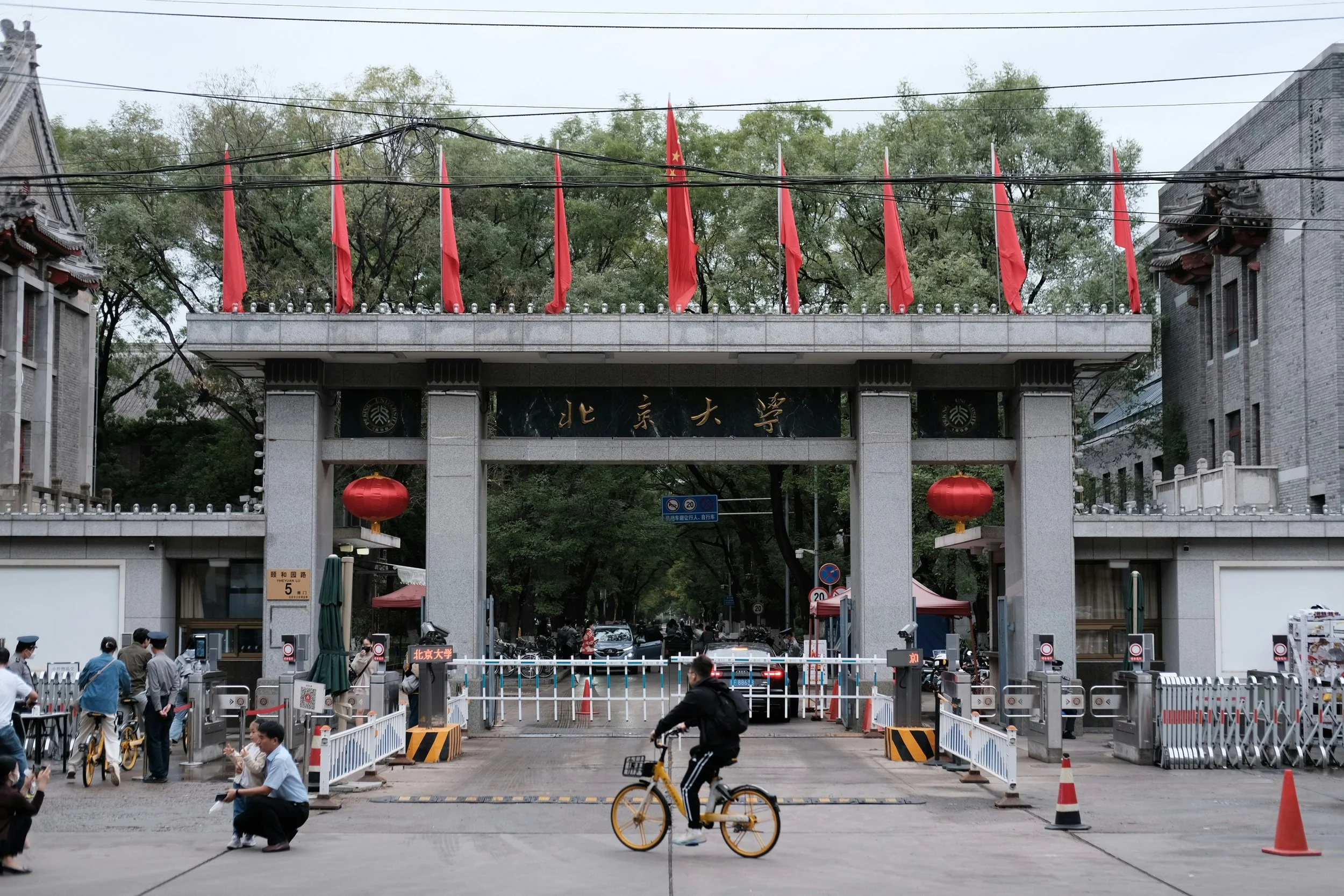
Peking University's South Gate, Beijing, China, with students and visitors passing by. Photo: YUHUI DU for Unsplash
Earlier this month, members of our team participated in the 22nd China Internet Research Conference (CIRC), held from July 7 to 9, 2025, at the School of Journalism and Communication, Peking University, in Beijing, China. Under the theme "The Future of Chinese Internet in the Era of AI," the event explored critical challenges as the digital landscape in Asia and globally becomes ever more intertwined with AI-driven systems.
Returning to Peking University ten years after the conference was held there offered participants an opportunity to reflect on how digital China had changed and how the conference and the field itself have evolved over the years. For our team, these discussions are closely tied to ongoing questions in our research: What politics and values are embedded in the infrastructures, services, and policies that shape emerging digital technologies in China and in the rest of the world? What kind of informal assemblages do people put together to carry on e-commerce across borders? How are Chinese technologies intertwined with Western (and other Asian!) ones?
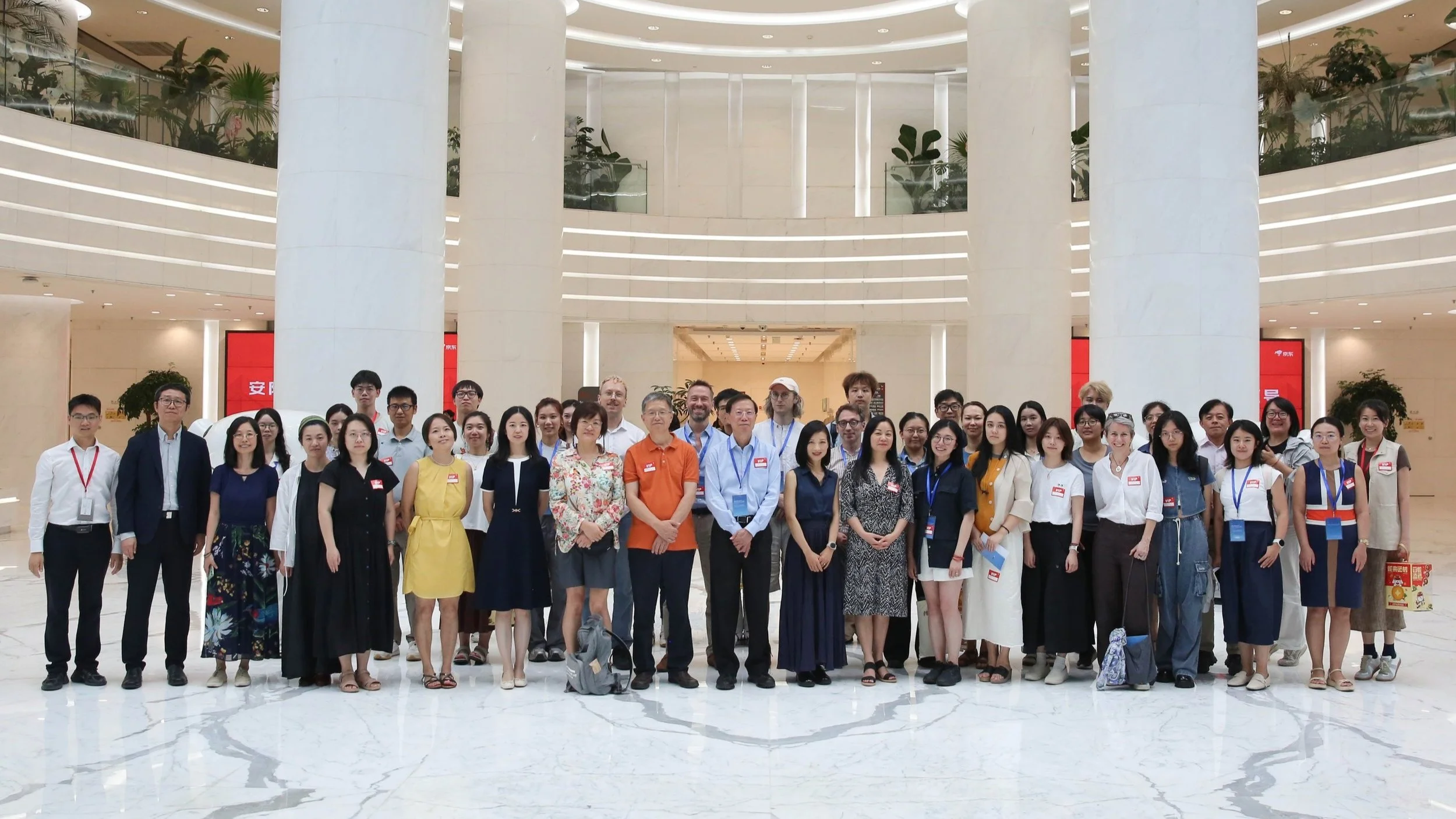
CIRC 2025 participants’ visit to JD headquarters in Beijing, on July 9
As part of the program, participants also visited JD.com, China’s largest retailer and a member of the NASDAQ-100 and Fortune Global 500, at its headquarters in Beijing. Accompanied by members of JD’s marketing team, they learned about the company’s AI-driven advertising and personalisation strategies.
Research highlights
Oyuna Baldakova, DIGISILK researcher on Central Asia, presented her paper “Digital Bazaars: (In)formality, Online Platforms, and Cross-Border Trade between Kazakhstan and China”. Her talk explored the evolving dynamics of cross-border and local trade in Kazakhstan, focusing on economic informality in the digital age. She examined how small and medium-scale e-commerce traders navigate multiple digital platforms that operate under different regulatory frameworks to sustain their businesses.
The paper challenges rigid distinctions between formal and informal economic activities, demonstrating how digitalization fosters a fluid spectrum of hybrid practices and underscores traders’ agency in selectively engaging with or bypassing formal institutions to meet pragmatic needs.
Elisa Oreglia, DIGISILK principal investigator, participated as a respondent in the panel “Media and Digital Economy Development,” that featured an excellent series of papers on AI and live e-commerce industry, local rural resistance to the dominance of transport apps, and a fascinating exploration of the online Chinese communities that have emerged around the British series Inside No.9.
Particularly relevant to DIGISILK was the presentation of the project on Global Media and Internet Concentration, spearheaded for China by Prof Min Jiang, which aims to map ownership and control of different media and digital sectors in several countries.
CIRC Reflections
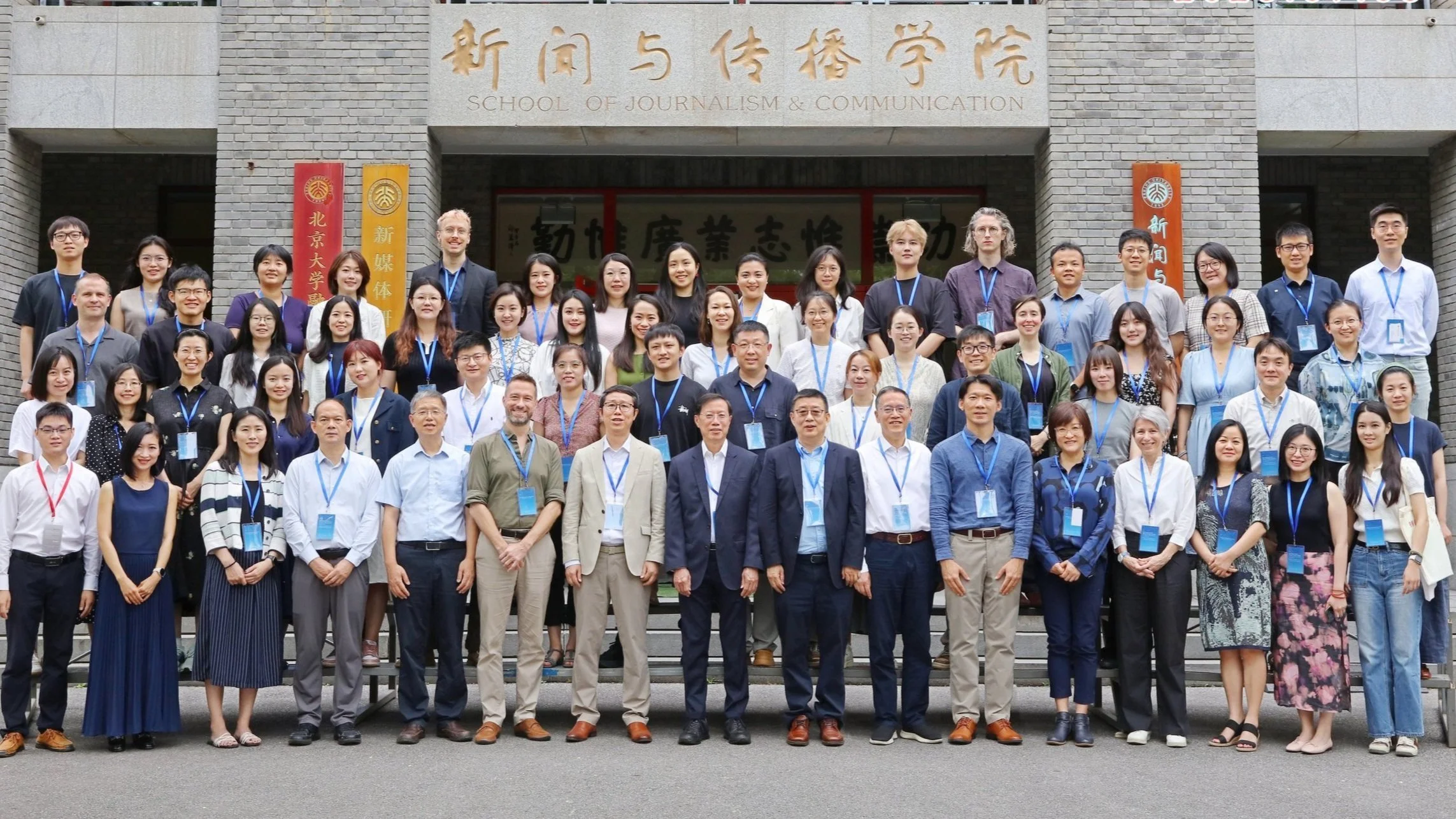
CIRC 2025 participants at the Peking University
Beyond the panel, Elisa also sat down with Meng Xingyuan, a postdoctoral fellow at Peking University’s School of Journalism and Communication, for an interview covering:
Elisa’s long history with the China Internet Research Conference:
"Looking back at the first time I attended CIRC (around the 4th or 5th session, which was held at the University of Pennsylvania’s Ann Arbor School of Communication), the Chinese scholars who attended the conference were mainly those working overseas, especially those in the United States. With the development over the years, more and more young Chinese scholars have joined, and CIRC has become the mainstream academic forum for Internet research in China. Their participation has injected fresh blood into the development of the entire field, which is a very virtuous cycle. In particular, I noticed that many female researchers participated in the conference this year, which made me happy and excited."
Her research on those at the margins of the digital economy:
"I am currently conducting a team study on the "Digital Silk Road" (DIGISILK), focusing on how large Chinese technology companies (such as Huawei, Alibaba, Tencent, etc.) 'go global' and invest in technology, innovate, and build local business ecosystems in neighboring countries such as Myanmar, Cambodia, and Kazakhstan. We study how these Chinese technology giants adjust their strategies according to the political, economic, and social environments of different countries, and use ethnographic research methods such as field surveys and interviews to observe the impact of Chinese digital technology on local societies from a macro (policy) and micro (especially marginalized groups) level."
And the challenges of AI in under-resourced countries:
"In my research, many countries (such as Myanmar and Cambodia) belong to 'low-resource' areas, and their languages are rarely included in large language models. Therefore, tasks that are very successful with major languages, like translating, are still a big challenge for those languages. I tried to use AI tools in my research to translate and organize some interview conversations, field survey notes, and literature, but sometimes AI can't even recognize these languages. This makes me worry that although AI is developing rapidly in China and the United States, some small languages are neglected due to insufficient data and content, which makes it difficult to apply and deploy AI locally in these places.“
You can read the full interview (in Chinese) here.